


The World Cup Has Come and Gone – Now Where To?

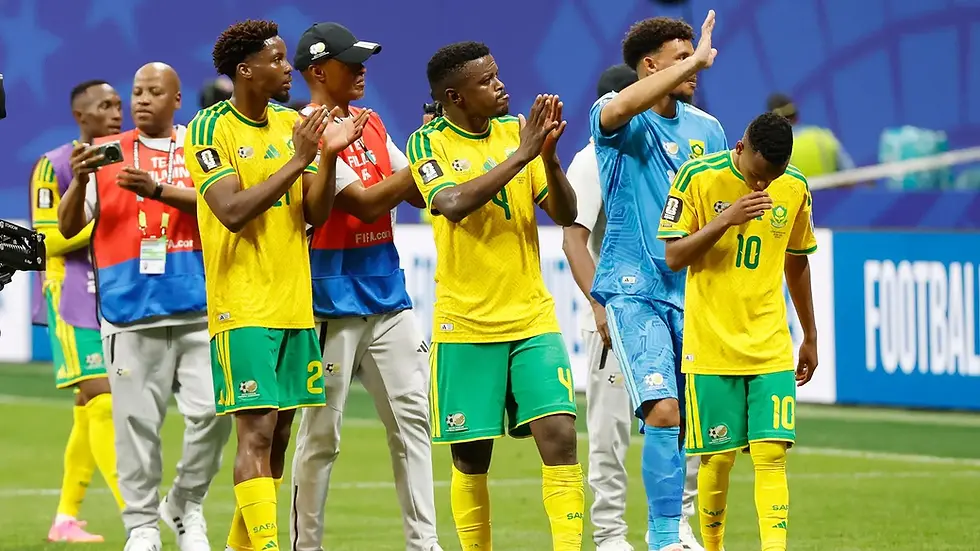
A few months ago, Bafana Bafana qualified for the knockout stages of the 2026 FIFA World Cup. For those of us who work in sport and understand the countless hours of effort behind building winning teams, the loss against a host nation in front of thousands of its fans was not the end of the world. In fact, this marked history: Bafana Bafana reached the knockout stages of the World Cup for the first time ever. Congratulations to the players, coaches, and support staff.
Was qualifying for the Round of 32 a fluke? I argue no. The lessons below, though drawn from football, apply broadly to sport development, performance, and management.
Doing What We Have Always Done
In June, I attended an U/17 tournament featuring eight teams. The atmosphere was electric, with players, spectators, and even the local mayor present. When addressing the participants, the mayor promised that “football grounds will be cleared and levelled by grader machines.”
But surely, in 2026, we cannot still be talking about clearing bare patches of land for children to play on. Vast regions like the Vhembe District are rich in talent, yet many youngsters still play on fields resembling those of the 1970s and 1980s—no grass, no proper goalposts, no lines, no nets. How can we expect to compete globally when our talent base trains under such conditions?
Good Sport Facilities
Providing proper basic facilities for children should not be difficult. The old White Paper on Sport and Recreation clearly outlines the role of municipalities in maintaining sport infrastructure. Yet, many municipalities allow facilities to decay, leaving children loitering after school instead of engaging in structured activities.
A grader machine is not a solution. What we need are quality artificial fields in communities and schools, scaled-down versions of centres like the Nike Centre in Soweto, with access control, changerooms, ablution facilities, and floodlights. If built, these facilities will be used. Across the country, weekend games already draw crowds. Let’s stop treating construction projects as easy money for contractors and start treating them as investments in our children.
Incorporation of Football Clubs
Many football clubs at the Local Football Association and Regional levels are not legally incorporated. Instead, they operate under individuals’ names and bank accounts. This undermines governance and sustainability.
The South African Football Association (SAFA) approved Club Licensing Regulations in 2012, yet implementation remains weak. Proper licensing would improve governance, raise standards, create safe environments, and ensure the long-term sustainability of amateur clubs. Without it, progress will remain stunted.
Schools with Sport Programmes and Physical Education
I have long emphasised the importance of proper school sport programmes and physical education. Yet, key role players—ministers, MECs, MMCs—seem blind to the current state of facilities and programmes. There is no vision to make South Africa a “Playing Nation” that becomes a “Winning Nation.”
This denial is embarrassing for sport professionals who continue to toil on underdeveloped facilities and in schools without sport infrastructure or physical education.
Conclusion
The path to South Africa becoming a sporting powerhouse is simple:
Break old habits. If we continue doing what we’ve always done, we’ll keep getting the same results. Change is essential in how we plan, organise, manage, and develop sport programmes.
Invest in facilities. Local municipalities and schools, especially historically disadvantaged schools, need proper sport infrastructure. Driving along the R538 in Hazyview, I saw hundreds of African children walking home after school, loitering on the roadside. At a nearby historically White school, children were still inside, engaged in sport. We must get African children off the streets and into structured programmes.
Strengthen governance. Football, our most popular sport, can open doors for poor and rural children. But only if clubs are incorporated, leagues are credible, and facilities are safe and well-managed.
Commit to year-round school sport. Knockout competitions and short-term athletics events are not enough. Growing good habits and being great athletes takes time. Ministers and officials must provide proper facilities, development officers, coordinators, coaches, and support services to ensure competitiveness.
South Africa has the talent, passion, and potential. What we lack is structure, vision, and commitment. If we fix these, Bafana Bafana’s success will not be a fluke—it will be the beginning of a winning era.


Comments